Webhooks
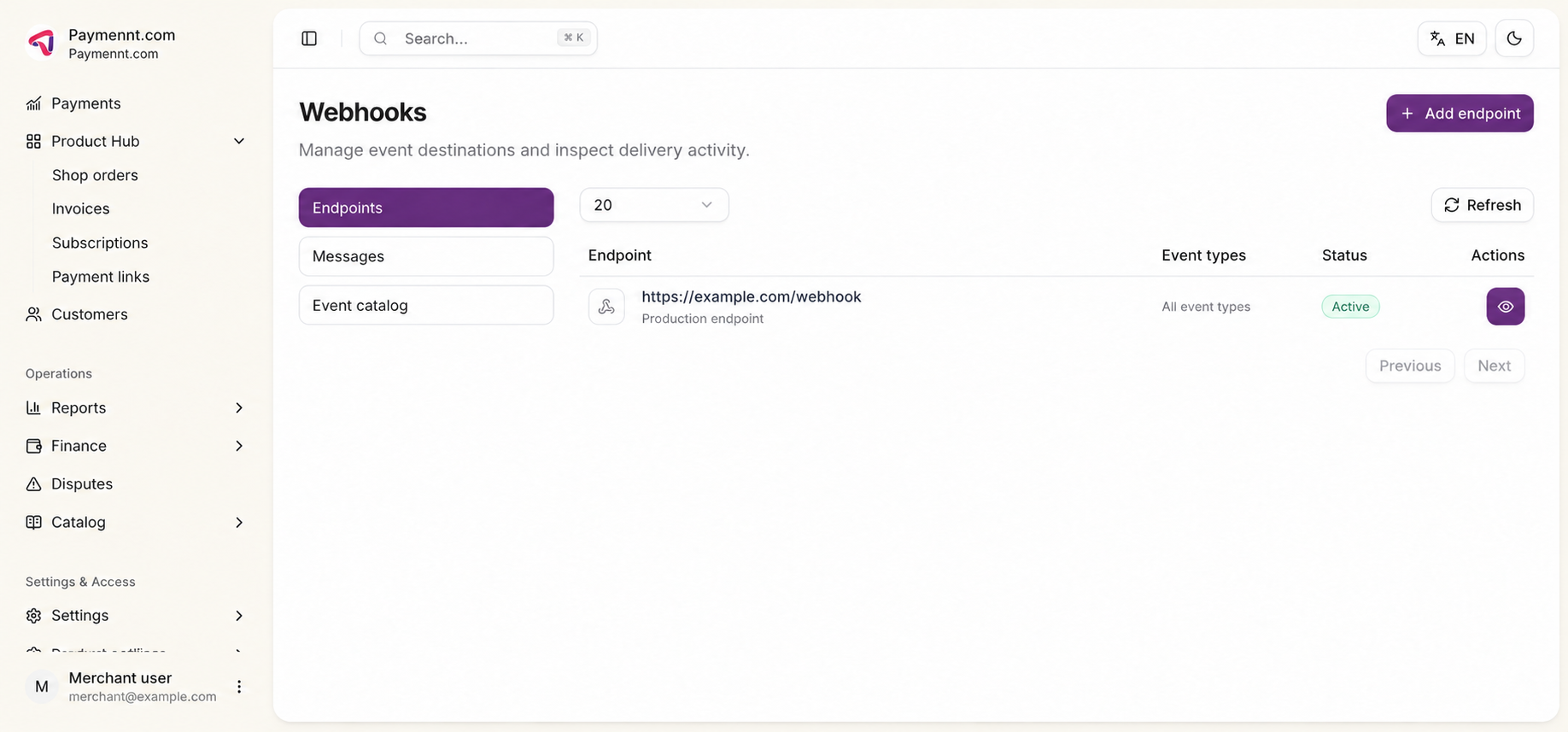
Use webhooks to receive checkout events in your application. Webhook endpoints are managed in the Paymennt Merchant Portal, not through the Paymennt API.
How webhooks work
Paymennt publishes checkout events to the active endpoints configured for your merchant.
You can manage endpoints and inspect activity from Developer → Webhooks in the Merchant Portal:
- Endpoints — create and manage HTTPS destinations.
- Messages — inspect published events, their payloads, and delivery attempts.
- Event catalog — review the event types available for subscription.
Each event has a unique event ID. Your receiver must tolerate duplicate deliveries and process the event idempotently. Return a 2xx response only after your receiver has safely accepted the event.
Available checkout events
The current event catalog contains:
checkout.createdcheckout.paidcheckout.failedcheckout.cancelledcheckout.expiredcheckout.refunded
See Configure an endpoint to subscribe to events, Verify signatures to authenticate incoming requests, Deliveries and replays to troubleshoot delivery, and Event payloads for the payload contract.
Migration from legacy webhooks
The legacy Webhooks API is no longer used to create or manage subscriptions. Create new endpoints in the Merchant Portal and move any existing integration to the portal-managed model before retiring its API-based configuration.